
Foods rich in protein and fiber, and low in fat. How can the plant-based protein category support consumers seeking greater well-being?
Public health is facing increasingly greater challenges due to population growth and modern lifestyles. One of these is the growing rate of obesity and overweight. According to the Food and Nutritional Surveillance System (SISVAN), linked to the Ministry of Health, 34,66% of the Brazilian population has some degree of obesity.
Globally, research from the World Health Organization (WHO) estimates that obesity was associated with approximately 3,7 million deaths in 2024 and that the number of people living with the condition could double by 2030. According to doctors and specialists, a balanced diet and regular physical exercise are the best options for a healthier lifestyle in this fight.
According to Marina Sallum, nutritionist and business specialist in the food industry, “The obesity figures in Brazil and worldwide reveal a structural problem that goes beyond individual behavior – they reflect a food environment that is not yet fully aligned with the nutritional needs of the population. From a public health perspective, this reinforces the urgency of solutions that are simultaneously accessible, practical, and nutritionally adequate ,” explains Marina.

In recent years, however, another component has entered this equation in the pursuit of health and well-being: slimming pens. In 2025, the purchase of these medications reached US$1,669 billion – approximately R$9 billion . In Brazil, 33% of households have at least one resident who uses or has used these medications , according to the Locomotiva Institute . With the current scenario, the need arose to adapt daily diets to the new way the body functions. According to the same research, 47% of households with users of the medication reduced their consumption of pasta and carbohydrates, while 40% increased their intake of foods considered healthy.
“GLP-1 medications are changing the relationship of a growing segment of the population with food – and this presents a great opportunity for the industry. With reduced appetite and intake, each meal takes on even greater nutritional importance: there is no room for empty calories. This creates a real demand for nutrient-dense foods, rich in protein and fiber, that fit into smaller portions,” says Marina.
Companies like ADM have already identified the market potential of this group and are developing ingredients, such as proteins, probiotics, and flavorings, aimed at this audience. “We created a platform of complete solutions to support the treatment of users of GLP-1 analog medications, considering the specific needs of each stage, whether during the use of weight-loss solutions or after regular application, when various precautions must be taken. Throughout the treatment, the focus is on helping to promote muscle health, prevent constipation, and maintain a healthy microbiota through fiber, prebiotics, and probiotics to minimize gastric discomfort and improve nutrient absorption. Proteins play a fundamental role in maintaining muscle mass, and hybrid or 100% plant-based solutions, in general, are products with lower amounts of saturated fat, in addition to having greater digestibility and a more accessible cost for the industry and the consumer ,” explains Tiago Coroa, product development and creation manager at ADM in Latin America.
Mounjaro, Ozempic and a balanced diet
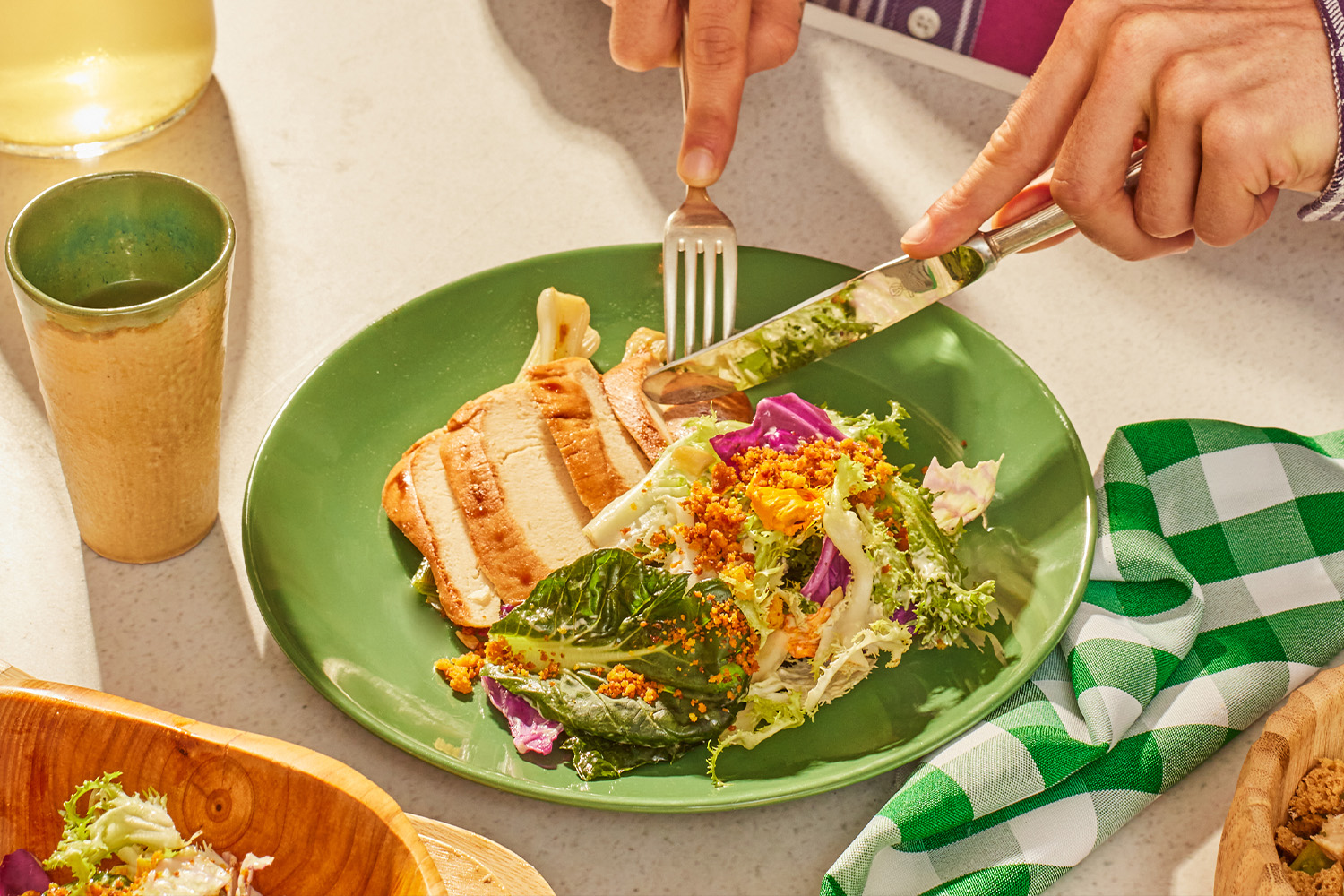
Looking at this new market niche, plant-based meats can become true partners for patients on GLP-1 diets. According to a study conducted by the GFI, Nutritional Aspects of Plant-Based Meat Analogs in the Brazilian Market , several products currently available on the market are considered sources of protein, some with levels exceeding 50%; 68% are considered sources of fiber; and only 9% of the plant-based meats analyzed are high in fat.
“Plant-based meats are an interesting option for those who need a balanced diet. The GFI Brazil study shows that the category has been evolving, with important advances in reducing sodium and saturated fat in many products. Furthermore, these foods contribute to protein intake and have a significant advantage: the presence of fiber, which is not present in conventional meat. As with any food choice, the most important thing is to observe the nutritional composition of each product and understand how to compose a balanced diet according to individual needs ,” says Cristiana Ambiel, Director of Science and Technology at GFI and coordinator of the study.
“Companies in the plant-based protein sector need to be attentive to changes in consumer behavior in order to position the category more strategically. If today we have a segment of the population seeking foods with the nutritional characteristics that plant-based meats offer, we need to communicate with this audience and show that the products are here to support them on this journey ,” highlights Raquel Casselli, Director of Corporate Engagement at GFI Brazil. She also emphasizes that this is an example of how a category can support consumers in resolving an emerging current tension, a topic highlighted in the research " Strategies to Unlock the Brazilian Plant-Based Meat Market ," published by GFI, which seeks to support the private sector in identifying opportunities for growth in the category.
“Strong categories don’t emerge out of nowhere; they respond to real dilemmas. Successful products tend to emerge during times of cultural, social, or behavioral change, where consumers seek to resolve a conflict between desires and constraints. The product’s function is to deliver a tangible response to this perceived discomfort, even if only partially. By recognizing a latent pain point and presenting itself as a solution, the product not only meets a need, it gains emotional relevance. And it is precisely this relevance that transforms initial curiosity into repeated behavior ,” says Camila Lupetti, Market Intelligence specialist at GFI Brazil.
What's next?
This is the first article in a new series that will be presented on GFI Brazil's channels about strategies to unlock the Brazilian plant-based meat market . Follow the blog and our social media to stay updated.

Author
Camila Lupetti
Senior Market Intelligence Specialist
Check out our latest releases
18/12/25