
New research by GFI Brazil highlights the main behaviors and profiles of consumers of plant-based alternatives in Brazil

Conducted with more than 2.000 individuals from the ABC class from all regions of the country, the survey revealed that 1 in 4 Brazilians consumes plant-based meats at least once a month and almost half of the respondents consume plant-based alternatives to milk and dairy products. The research “360° Look at the Brazilian Consumer and the Plant-based Market 2023/2024” seeks to deepen knowledge about the consumption of plant-based products similar to meat products of animal origin in Brazil, understand the nuances of eating behavior that influence the population to adopt or reject this type of product and obtain an overview of how the consumption of innovative foods has been treated in digital environments. The research was only possible thanks to the support of our partners: AAK, Incrível!, MrVeggy, NotCo, N.OVO and PlantPlus Foods. Unlike previous years, in which we developed exclusively quantitative research, this time the study consisted of three stages: social listening with social network analysis; qualitative research with focus groups; and quantitative research with a statistically representative sample. Here, we highlight some of the main results of the research: – 26% of Brazilians consume plant-based meats at least once a month. When it comes to plant-based alternatives to milk and dairy products, that number jumps to 48%. – 66% define themselves as omnivores, while 34% establish some restriction on products of animal origin. Of these, 21% are reducing, but not eliminating, their meat consumption (flexitarians), 8% are pescetarians (a plant-based diet that includes fish) and 5% declare themselves to be vegans (a 100% plant-based diet) or vegetarians (a plant-based diet that includes eggs and milk). – 36% of Brazilians have reduced their consumption of red meat in the last 12 months. Health (38%) and high cost (35%) were cited as the main motivations. – The role of women in food decisions is predominant: 81% of women say they are responsible for choosing the menu, 82% for cooking and 81% for shopping. Among men, these numbers are significantly lower: 56%, 50% and 69%, respectively. – 52% consider the idea of plant-based meat analogues to be good or very good, but only 18% have tried these products. Opportunities and Challenges Camila Lupetti, Data Specialist at GFI Brazil and one of the authors of the research, highlights that the consumption of plant-based meats is still niche, but has great potential for growth. “There is still a lot to be done in terms of research and development to deliver products that offer competitive taste, price and convenience, and we understand that the time to invest is now,” says Lupetti. She also highlights the importance of improving the availability and communication of plant-based products. “It is crucial to strengthen communication with the most adherent profile, providing clear information and clarifying controversies, so that these consumers can become ambassadors of the category in their social circles,” comments the specialist. DOWNLOAD THE SURVEY! Launch Webinar To discuss these and other insights, GFI Brazil invites everyone to participate in the research launch webinar. The event will take place on May 29th, at 05 am, on the GFI Brasil YouTube channel. Data expert Camila Lupetti will present key findings and analysis, offering a unique opportunity to understand trends in the plant-based market. Don't miss this chance to delve deeper into the transformations in the sector! Watch the broadcast: https://www.youtube.com/watch?v=R3ONnbCO8aM
Opinion: Why we shouldn’t turn to insects as an alternative protein source
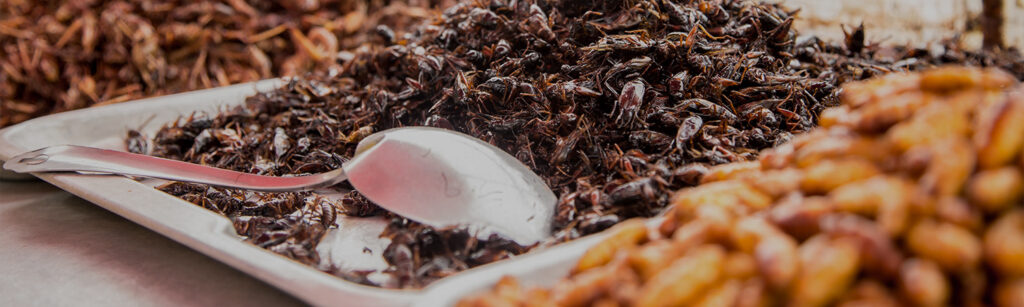
Insects are animals and, in addition to carrying the same ethical challenges as raising other living beings for consumption, they also present production inefficiencies, risk of infectious diseases and environmental risks. By Gustavo Guadagnini, president of The Good Food Institute Brazil Recently, the Globo Repórter program on TV Globo aired a very interesting report on food technologies that are already known and others that are in full development, with the potential to create a more sustainable food system. In addition to initiatives related to waste reduction, unconventional edible plants (PANCs), and alternative proteins obtained through fermentation, cell culture, and plant-based methods, one of the panels also addressed the use of insects for human consumption. As president of The Good Food Institute Brazil, an organization that supports the development of alternative proteins, I want to clarify why our organization does not endorse the development of the food chain from insects and how it compares to technologies in our sector. Insects: animals, not alternatives. The inclusion of insects as a protein option is not aligned with our mission to seek alternatives to animal products, due to ethical challenges similar to those faced in raising animals for slaughter, such as animal welfare and the morality of using living beings for consumption. Consumer acceptance Our sector works to deliver foods that are already part of people's culture and eating habits, produced using more socio-environmentally appropriate technologies. The foods we work with are highly accepted by consumers, who are increasingly interested in trying them and incorporating them into their diets. Acceptance of insect consumption is notoriously low. Although they are consumed in some regions of Asia, Africa and South America, in Europe, for example, only 10% of the population would be willing to try insects, according to a survey by the European Consumer Organization. This is because a large part of the population does not associate insects with food, but with something grotesque or something that can be harmful to health. Furthermore, research from Imperial College London in the United Kingdom indicates that the development of this industry aims to serve, mainly, the market in developing countries. The claim is that in richer countries, such as Europe, there is rarely a lack of nutrients in the diet. The global impact of any food source depends directly on its acceptance by the consumer: if people do not accept insects as food, their impact on the world will always be limited.1 Meat replacement Whenever we see presentations about the socio-environmental benefits of consuming alternative proteins and insects, there is a comparison with meat. Both can, indeed, be the result of more efficient production than animal meat, but this comparison is only true if one is replacing the other. If consumers switch from eating animal meat to eating plant-based meat, there will be a benefit to sustainability. The issue is that foods made from insects do not have this purpose, since they are snacks, protein bars and supplements, for example. The best commercial proposal for insects is to grind them into powder and include them in processed foods. There are no good insect products that truly compare to the taste, texture, aroma and appearance of meat. If there is no exchange, the comparison with meat no longer makes sense – and the sustainability benefits are not realized. Production Efficiency Today, we grow grains to feed animals for consumption at an extremely inefficient rate. Data shows that 83% of the planet's arable land produces less than 20% of the calories consumed2. These are large areas of soy, corn and other grains that feed the animals and not the population directly. For every calorie someone consumes from beef, approximately 34 calories were given to the animal throughout its life, representing a disproportionate waste of calories produced by the food system3: the most efficient production, chicken, has a conversion rate of 8:1, for example. Meanwhile, alternative proteins allow you to eat the vegetable directly, without it having been previously processed by an animal. It is not the same for insects, which also feed to generate calories later. Studies indicate that insects produced for human consumption can have conversion rates as inefficient as chicken meat4, ranging from 4:1 to 9:1 in the ratio of food consumed versus slaughter weight. It is also worth highlighting that insects that feed on waste cannot be used for human consumption, as we are often led to believe5. Environmental risks Production efficiency is directly linked to gas emissions, water and land use. Therefore, all alternative protein technologies are more sustainable than the foods they replace. As demonstrated above, the case of insects is not so clear. At the same time, insect production adds new environmental risks: if a building housing massive numbers of these animals is damaged by an accident or a climate event, for example, thousands of exotic insects, with a high potential for destruction and imbalance, could be released into nature. Recently, problems caused by locust swarms have made headlines globally6. Furthermore, there are still no regulations on the handling of insects and they are often transported manually, whether for research or food production purposes. In general, live insects are transported in ordinary cars, inside trays or boxes. In the event of a car accident, they would be released into the environment, with an immeasurable potential to generate an ecological disaster. Global Health Risks Many insect productions still use large amounts of antibiotics, just like any other animal production. This fact contributes to the formation of resistant bacteria, with the potential to affect human health. At the same time, insects are also vectors of viruses, bringing an additional risk. We know that farm animals pose a major health risk to humanity: the WHO warns that 60% of new infectious diseases are of zoonotic origin.
Brazilian plant-based meat market surpassed R$1 billion mark in 2023
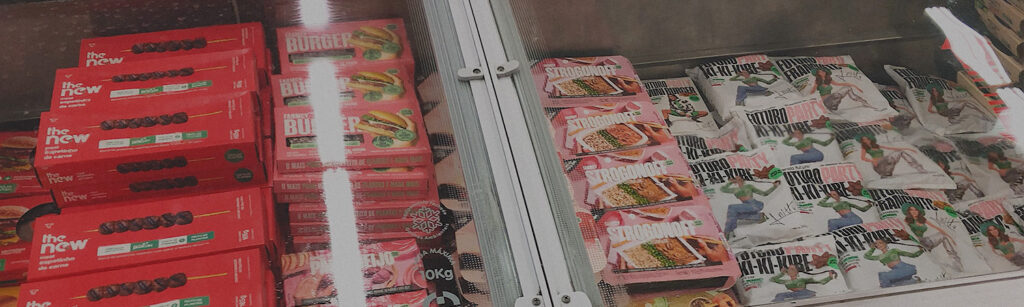
In 2023, the consumption of plant-based meat and seafood substitutes reached new heights in Brazil, with retail sales reaching R$1,1 billion, an increase of 38% compared to the previous year. The volume of products sold (tons) also grew substantially, with an increase of 22%. The plant-based milk market showed growth of 9,5%, with sales totaling R$673 million.¹ In 2022, plant-based meat and seafood substitutes had already shown significant growth of 42%, reaching R$821 million in sales. Plant-based milks also grew by 15%, reaching R$612 million. Looking back at 2021, growth has been equally promising, with sales of these substitutes up 30% compared to 2020. At the time, Euromonitor was already forecasting that the industry could surpass US$425,3 million in sales by 2026 (approximately R$2,2 billion at current exchange rates) – and the latest data indicates that we are on track to exceed these expectations. To learn more about the global markets for Cultivated meat and plant-based and fermented food analogues, access the new GFI “State of The Industry Reports 2023”. Here’s a preview of the key insights you’ll find in the reports: Access the full reports to dive deeper into the analysis and stay up to date on everything that’s happening in the industry globally! 1.”Euromonitor International Limited, Fresh Food 2024, retail value RSP incl sales tax, US$, fixed 2023 exchange rate, constant terms. © 2023 The Good Food Institute, Inc.
Check out GFI Brazil's schedule at the Nutri Ingredients Summit 2024

The Nutri Ingredients Summit is the largest and most comprehensive event focused on health in the country, and The Good Food Institute Brazil is one of the official partners of the initiative. In its 4th edition, which will take place in São Paulo, at the Transamérica Expor Center, between April 23 and 24, the summit promises to connect suppliers of functional ingredients to the food, beverage, dietary supplement and pharmaceutical industries. You can't miss it! Visit the event page to check out the full schedule and register for free until April 20, 04. Connect with GFI Brazil at NIS Application Trends NIS Application Trends is an arena open to all visitors, held by sponsors with the objective of presenting new ingredient launches and demonstrating how they can be applied by the industry. In this edition, the Science and Technology team of GFI Brazil will present cases that aim to attribute even more sustainability to plant-based analogue products. Check out our schedule: 2024:10 am: National plant-based proteins with potential for application in analogous vegetable foods Speaker: Dr. Ana Carla Sato – Professor at the School of Food Engineering UNICAMP 30:10 am: Development of ingredients by fermentation from peanut waste (or by-products) Speaker: Dr. Paula Speranza – Founder of ProVerde 50:11 am: Ingredients from biodiversity: perspectives and challenges Speaker: Dr. Luciana Fontinelle – Coordinator of the Biomes Program at GFI Brazil. 10:11 am: Roundtable: Sustainable Vegetable Ingredients for the Plant-based Industry. Mediator: MSc Cristiana Ambiel – Science and Technology Manager – GFI Brazil Participants: Dr. Ana Carla Sato (UNICAMP), Dr. Paula Speranza (ProVerde) and Dr. Luciana Fontinelle (GFI Brazil). Service: – GFI Brazil at the Nutri Ingredients Summit – NIS 30 – April 2024, starting at 23:04 am – Transamérica Expor Center, at the Aplications Trends arena. Address: Av. Dr. Mário Vilas Boas Rodrigues, 10 – Santo Amaro, São Paulo – SP, 30-387 We are waiting for you!
What can we expect for the alternative protein market in 2024?

Despite challenges across the macroeconomic landscape, geopolitical dynamics, financing, and infrastructure, the alternative protein industry shows signs of resilience. Experts from The Good Food Institute Brazil analyze the industry predictions that will drive the next wave of development toward mass consumer adoption. By 2024, the alternative protein market will experience significant transformations, driven by technological innovations, changing consumption patterns, and growing awareness about health and the environment. Based on some current trends, we can anticipate some directions this market will take throughout the year. Increased Product Variety The diversity of plant-based products available is expected to increase and serve consumers at all times of consumption, from breakfast, lunch, dinner and snacks, whether with foods with a healthier appeal or more indulgent dishes. This expansion in variety not only covers a wider range of consumer preferences but also facilitates the adoption of plant-based foods in the daily diet, making it a viable option for a wider audience. Strategic partnerships and market consolidation Strategic partnerships between food companies and restaurants can contribute to the expansion of plant-based options on menus. These types of partnerships are very common in other countries, where the market is more mature, and these experiences show that such collaborations can increase both the accessibility and visibility of these alternatives. Furthermore, brand consolidation is expected, driven by retail demand, keeping on the shelves products and brands that offer the sensory experience closest to what the consumer wants in terms of taste, texture and appearance of food. Technological advancement Technological development will continue to be a driver of innovation for the sector, bringing products with better sensory performance. Innovations in ingredients and processing techniques are expected to offer more satisfying consumer experiences. In particular, ingredients developed through fermentation processes may attract more attention from the sector, given their ability to improve the nutritional and sensory profile of products. Greater focus on health Companies already established in the alternative protein market must continue to emphasize health in their launches and relaunches. Formulations that meet the demands for less cholesterol, sodium, and fat, as well as the inclusion of natural ingredients familiar to consumers, will become increasingly common. This focus on health reflects a direct response to consumer concerns and an attempt to align plant-based products with expectations of health and well-being benefits. Price The issue of price remains central, with the industry striving to make plant-based products more accessible. This involves increased investment in local supply chains, the development of new ingredients and processes, and continued efforts to reduce production and logistics costs. Such initiatives are essential to equalize or at least bring the price range of plant-based products closer to that of their animal-based counterparts, making them a viable option for a wider range of the population. Challenges for the Sector Despite optimistic forecasts, the sector faces significant challenges related to the points mentioned above: a) attracting more consumers: the adoption of plant-based foods in the diet is a question for many, especially when we consider concerns about the healthiness and nutritional perception surrounding plant-based foods; b) comparing the price of these products with those of animal origin: it is essential to find a balance between production costs and the purchasing power of the population, which faces the effects of inflation – including in the food sector. Companies in the sector need to work to close this gap, demonstrating that it is possible to offer plant-based options that are not only competitive in price and quality, but are also perceived as nutritious and beneficial to health. Regulatory advances: The Ministry of Agriculture and Livestock (MAPA) should follow the regulatory agenda on the production and labeling of plant-based products, holding public hearings throughout the year to discuss the draft of the Ordinance that was submitted for public consultation in 2023, and which proposes a regulatory framework to address the lack of a minimum regulation for plant-based analog products. Furthermore, with the inclusion of proteins obtained through cell culture and fermentation in the list of new ingredients and foods by Anvisa at the end of last year, through Resolution RDC No. 839, we should also observe this year the beginning of regulatory discussions on these two technologies, spearheaded by MAPA and Anvisa itself. Cultivated meat and Fermentation: With ANVISA Resolution 839, which guides companies on submitting products and ingredients for safety verification and authorization for the use of new foods and new ingredients, it is expected that companies already developing these new foods will present their products and ingredients for ANVISA's evaluation. Additionally, we should also see more companies holding product tasting and application events for specific audiences, such as investors and the press. These are the first steps towards commercializing these new technologies in Brazil. It is now up to the Ministry of Agriculture to regulate issues related to product registration, labeling, and inspection of production units, a debate that should begin this year. “The plant-based market in 2024 is expected to be characterized by greater product diversity, brand consolidation, strategic partnerships, technological advancements, a renewed focus on healthiness, and continued efforts to make products more accessible. The regulatory advances achieved at the end of 2023 demonstrate that Brazil is aligning with the rest of the world in understanding that this sector will evolve rapidly and that it is necessary to create strict technical standards so that innovative products can begin to be produced in the country. This is also the year that products made with fermentation technologies and Cultivated meat are expected to reach consumers. We will monitor how these foods will be incorporated into Brazilian eating habits.” - Raquel
Historic: Israel becomes the first country in the world to allow the sale of cultivated beef!

Today, January 17, 2024, Israel granted regulatory approval for Aleph Farms to market its products in the country. With this, Israel joins the United States and Singapore, the only countries that already allow the sale of meat cultivated in their territories. The difference is that, until now, all approvals had been related to cultivated chicken meat, making Israel the first country in the world to authorize the sale of cultivated beef. This approval grants Aleph Farms permission to produce and market its products within Israeli territory, subject to specific guidelines for labeling and advertising provided by the local Ministry of Health and the completion of the inspection of the pilot production facility. Petit Steak The first product to be launched by the company under the Aleph Cuts brand will be the “Petit Steak”, a steak grown from premium Angus cells. The hybrid meat product is composed of unmodified, non-immortalized cells from a premium black Angus cow, along with a plant-based protein matrix made from soy and wheat. Other than cells derived from one of the cow's fertilized eggs, there are no other components of animal origin in the cultivation process or in the final product. The controlled and traceable process is carried out in an aseptic production environment, which significantly reduces the risks of contamination and eliminates the need for antibiotics. Once the facility’s labeling and inspection requirements are complete, the product will be made available in select restaurants and then distributed to other foodservice and retail outlets. Regarding cost, the company revealed that, at the time of launch, Petit Steak will have prices similar to conventional premium beef. GFI’s participation in the process We at The Good Food Institute celebrate the approval because we played a major role in achieving this milestone. We have held several workshops with the Aleph Farms team and were the first to present Cultivated meat technology to Israeli regulators and Prime Minister Netanyahu in 2020 and 2023, when he tried the company’s Cultivated meat. Furthermore, Aleph Farms was founded based on the PhD project of our former Senior Scientist, Dr. Tom Ben Arye Cohen. This approval not only marks a pivotal moment, but also serves as a solid reassurance for the Cultivated meat sector amid prevailing doubts and questions. We trust that this milestone will send a compelling message to industry players, encouraging them to persist in their investments and advancements in the field. “The approval of Aleph Farms’ Cultivated meat in Israel represents a monumental step forward for the alternative protein sector globally. This is a shining example of what innovation, combined with science and sustainability, can achieve. At The Good Food Institute Brazil, we see this as a promising sign of things to come. The fact that this specific product is already scheduled to arrive in Brazil, in partnership with the local industry, is a testament to the potential that Cultivated meat has to revolutionize the food system, offering sustainable and ethical alternatives without compromising on taste or tradition. This is also a crucial moment for Brazil, which has also published its first regulatory pathway for products of this type and can position itself as a leader in the adoption and innovation of alternative proteins, bringing benefits both to our economy and to the environment”, comments the President of The Good Food Institute Brazil, Gustavo Guadagnini. Israel Three of the world's top eight Cultivated meat companies are Israeli, and 15% of global investment in the field goes to them. The country has supported and promoted alternative proteins for many years, given the nation’s ongoing battle with food insecurity: according to government data, in 2021, 16% of Israeli families and 21% of children did not have adequate access to safe and nutritious food. Among households with children, 19% faced food insecurity, while 8,5% suffered from severe food insecurity. Because Cultivated meat does not rely on livestock farming, large areas of farmland or large amounts of water, the benefits for food security are as relevant as for climate change, especially in a country with a harsh climate and more than half of its territory made up of desert soils. Aleph Farms’ achievement in Israel is a huge victory, but it doesn’t stop there. The company has already applied for sales authorization in Singapore, Switzerland, the United Kingdom, and the United States, and is also advancing with applications in other markets.
COP28: Brazil and 133 other countries sign unprecedented declaration committing to produce food more sustainably

The declaration is the first of its kind to place food systems at the center of the climate debate. During the event “Transforming Food Systems in the Face of Climate Change”, which took place today, December 1, on the second day of COP12, in Dubai, the United Arab Emirates declaration on Sustainable Agriculture, Resilient Food Systems and Climate Action was launched, signed by 28 countries, including Brazil. According to Gus Guadagnini, president of GFI Brazil who participated in the panel, the declaration was an important step towards consolidating the issue of food systems as one of the global priorities in combating the climate emergency. “We are very pleased to see that governments are committing to supporting more of this type of solution. "This is the direction in which GFI works: to bring scalable innovations so that people can maintain their eating habits and traditions, while consuming more sustainable food that does not require as many resources as water and land to produce, nor harm the environment with the emission of polluting gases," Guadagnini celebrated. According to Andy Jarvis, Director of the Future of Food (Bezos Earth Found), this is the first time at a COP that food systems have had this level of visibility. “This declaration endorses that, and now we need nations not only to sign it, but to be courageous and bold in their actions going forward,” Jarvis stated. In 2023, Brazil's Minister of the Environment, Marina Silva, raised Brazil's NDC (Nationally Determined Contributions) commitments to a 48% reduction in emissions by 2025 and a 53% reduction by 2030. The seven sectors covered by the national NDCs include energy, urban mobility, forests, biofuels, solid waste, public lighting and transport, but do not directly mention agriculture, or food systems, for example. “The declaration signed today by Brazil at COP28 brings enthusiasm for the possibility of food systems being a priority issue for the Brazilian government on the road to COP30, which will take place in 2025 in Belém, Pará,” said Guadagnini. At the event, Bill Gates announced a partnership with the United Arab Emirates to invest USD 200 million in innovations for food systems and announced further investments through AIM for Climate, an initiative of the governments of the United States and United Arab Emirates, to finance scalable solutions for the sector. Also participating were leaders such as Mariam Almheiri, Minister of Environment of the United Arab Emirates, Antoine de Saint-Affrique, CEO of Danone, Joko Widodo, President of Indonesia, Giorgia Meloni, Prime Minister of Italy, Naomi Mata'afa, Prime Minister of Samoa, Anthony John Blinken, US Secretary of State, Dr. Ismahane Elouafi, Executive Director of the Consortium of International Agricultural Research Centers (CGIAR), Roberto S. Waack, President of the Arapyau Institute, Dr. Qu Dongyum, Director-General of FAO (UN), and Razan Al Mubarak, UN Climate Change High Level Champion. During the discussions, Antoine de Saint-Affrique reinforced the importance of the private sector in favor of the development of climate solutions for food systems, highlighting the need for scaling up of new technologies and increasing financing for the sector. Furthermore, Roberto S. Waack also cited philanthropy as a catalyst for change and highlighted the relevance of freedom of action. The President of Indonesia addressed the need to transfer cutting-edge technology to countries that need it most, while the Prime Minister of Italy reinforced Italy's commitments to climate change and mentioned that the country supports such initiatives in Africa, but stressed that the continent does not only need charity, but also space to compete equally on the global stage. The Prime Minister of Samoa mentioned the importance of digital integration in the field and the US Secretary of State endorsed that the declaration will be a historic milestone, remembering the environmental disasters of this year, highlighting that, behind the statistics, there are real people suffering from the climate emergency. Here is the full translated statement: We, Heads of State and Government: Recognizing that unprecedented and adverse climate impacts increasingly threaten the resilience of agriculture and food systems, as well as the ability of many, especially the most vulnerable, to produce and access food in the face of rising hunger, malnutrition and economic stress; Recognizing the profound potential of agriculture and food systems to drive powerful and innovative responses to climate change and enable shared prosperity for all; Emphasizing the need to progressively realize the right to adequate food in the context of national food security, as well as the need to ensure access to safe, sufficient, affordable and nutritious food for all; Noting that agriculture and food systems are fundamental to the lives and livelihoods of billions of people, including smallholder farmers, family farmers, fishers and other food producers and workers; Observing the essential role of international and multilateral cooperation, including South-South and Triangular cooperation, financial and financing institutions, trade, and non-governmental organizations in responding to climate change; Reaffirming our respective collective and individual commitments to the 2030 Agenda for Sustainable Development, the United Nations Framework Convention on Climate Change and the Paris Agreement, the United Nations Convention on Biological Diversity and the Kunming-Montreal Global Biodiversity Framework, the United Nations Convention to Combat Desertification, and the Sharm El Sheikh Joint Work on implementing climate action in agriculture and food security; also considering the UN Food Systems Summit; Recalling also the United Nations Framework Convention on Climate Change and the Paris Agreement, recognizing that they are the main international and intergovernmental forums for negotiating the global response to climate change; Recalling the conclusions of the recent assessments by the Intergovernmental Panel on Climate Change (IPCC), and considering the Synthesis Report of the technical dialogues concerning the First Global Stock Assessment (GST); we emphasize that any path to fully achieving the objectives...
Bean projects win first and second place at the FI Awards 2023

Avante Food Systems and SL Alimentos were the big winners of the FI Awards 2023. Considered the biggest innovation award in the food, beverage and ingredients industry, the Food and Ingredients Innovation Awards and StartUp Innovation Challenge took place on October 16, in São Paulo, and honored two bean projects, a national ingredient, low cost, sustainable planting, high nutritional value and which has great potential to assume greater prominence in the plant-based food sector, where soy and peas still predominate as protein sources. SL Alimentos, a leading company in human food and animal nutrition, won the “Innovation in Sustainability” award with its concentrated cowpea protein, which can be used in baby food, extruded products, cookies, breads, cakes, supplements, meat analogues and textured protein. In addition to containing twice as much protein as other cereals used by the industry, cowpeas are highly nutritious, rich in iron and zinc, and offer several health benefits. For the director of Research, Development & Innovation at SL Alimentos, Thomaz Setti, “beans are the ingredient of the present and the future, because they are obtained without the need to explore water resources and without the use of chemical reagents. For the consumer, it also offers the advantages of increasing the protein content of foods and improving the amino acid profile, in addition to contributing to food safety. We are thrilled and proud of this recognition.” São Paulo-based Avante Food Systems, formerly R & S BLUMOS, was a finalist in two categories and won an award in the Sustainability category with its Carnevale® WUT culinary protein. The food is obtained by wet extrusion and made from combined Brazilian legume proteins, providing a 100% plant-based ingredient, with a unique and versatile protein texture, with up to 23% protein, zero carbohydrates, low fat and calories and free of preservatives. One of its main ingredients is a protein concentrate from upcycled carioca beans, a pioneering initiative in the world in the creation and application of carioca bean ingredients. Today, Carnevale® culinary proteins are sold to industrial customers through BLUMOS and to establishments such as restaurants, hotels and cafeterias through Plural Food Solutions. “It is a protein that is good for the planet and good for people looking to diversify their protein sources, as it is versatile for multiple recipes and dishes, delicious and has a surprising texture. And, to offer delicious protein dishes with Carnevale WUT, we are approaching Chefs who elevate the potential of our culinary protein and make the sensory experience incredible”, says Fernando Santana, CEO of Avante Food Systems. The FI Awards prove that beans are a strategic focus that is gaining ground. Recently, GFI Brazil funded a research conducted by Dr. Caroline Mellinger, a researcher at Embrapa, who aims to find alternatives for the use of carioca beans by the alternative protein industry. In addition, we are also working with rural producer associations in Mato Grosso and the state's Economic Development Secretariat to draft a technical cooperation agreement that aims to test the technological and economic viability of bean processing within rural cooperatives.
Brazilian meat and plant-based milk market grew 42% and 15%, respectively, in 2022
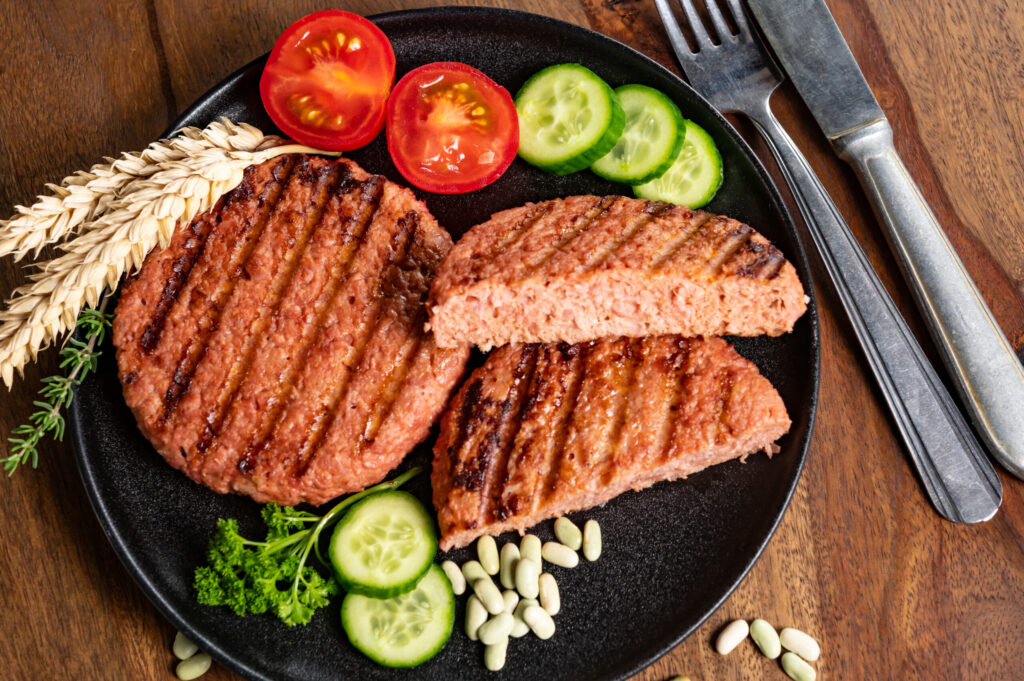
The plant-based food analogue sector already has at least 107 companies, with products that replace meat, milk, dairy products and eggs. According to data from Euromonitor's Passport platform, in 2022 the market for plant-based meat and seafood substitutes in Brazil reached R$821 million in retail sales, representing a growth of 42% compared to 2021. Meanwhile, the plant-based milk market reached R$612 million in retail sales, a 15% increase compared to the previous year. In 2021, Euromonitor had already recorded a 30% growth in retail sales of plant-based meat and seafood substitutes compared to 2020. At that time, the platform estimated that by 2026 this sector could exceed US$425,3 million in sales in the Brazilian market. Today, our market for alternative analogue proteins has at least 107 companies and already exports products to around 30 countries. If we take into account that the first plant-based burger in Brazil was launched in May 2019, we can see how quickly the sector has been developing and how significant the penetration of these products into the daily lives of Brazilians is. The increase in retail sales, both for plant-based substitutes for meat and seafood and for plant-based milks, reflects some changes that have been occurring in Brazilian consumer behavior, analyzed in the research “The Brazilian Consumer and the Plant-Based Market 2022” by The Good Food Institute Brazil (GFI Brazil). One of them is the reduction in meat consumption: research shows that, in 2022, 67% of Brazilians reduced their meat consumption (beef, pork, poultry and fish) recently, an increase of 17 percentage points compared to 2020. The increase in the price of meat was what motivated 45% of Brazilians to reduce their consumption, but for another 36%, this reduction was motivated by health-related issues, such as improving digestion, reducing cholesterol or losing weight. When added to concerns about animals, the environment, family influence, religious and spiritual reasons, we see that these issues motivated more than half (52%) of Brazilians to reduce their meat consumption by their own choice. The data also shows that the intention to reduce meat intake does not appear to be a temporary behavior, on the contrary: regardless of the initial reason, 46% of consumers who have already reduced meat consumption say they intend to maintain this level of consumption and 47% intend to reduce it even further in the next year. Of the consumers who reduced the amount of meat on their plate, 34% replaced it only or mainly with plant-based meats, 9 percentage points more than in 2020. Among Brazilians who have cut out meat for health reasons, 40% use plant-based meat as their main or exclusive substitute. This reality aligns with another relevant factor for the consolidation of the alternative protein sector in Brazil, which is the significant adoption of flexitarianism. This is the eating style that seeks to reduce, without completely excluding, the consumption of products of animal origin. In 2022, 28% of Brazilians already defined themselves as flexitarians. Of these, 60% said they would like to further reduce their meat consumption in the twelve months following the survey. This indicates that a significant portion of consumers already see this reduction as a defining part of their current eating habits. It is also worth noting that 75% of consumers surveyed say they are open to trying foods made using new technologies, and 68% envision plant-based meats being incorporated into their diet in the future. Therefore, we can conclude that today we have a relevant portion of consumers with an appetite for the category and a positive view on new technologies applied to food production. “All of this sales and consumer behavior data points to a movement towards consolidation of the vegetable protein market in Brazil. On one side, we have the consumer trying to balance more economical choices and at the same time healthier and more sustainable choices in their diet. On the other hand, the industry has been investing in the development of products that meet these demands without forgetting about flavor, that is, delivering a truly enjoyable meal experience for the consumer. Over the last 4 years we have made significant progress in this area, with the launch of a wide variety of truly innovative products. But there are still many challenges to overcome on several fronts before plant-based alternatives are available and competitively accessible to all consumers.” – Gustavo Guadagnini, President of GFI Brazil.
Scaler: Meet the new state-of-the-art technical-economic analysis tool for fermentation

Synonym, the platform accelerating the world’s biological future by developing, financing, and building commercial-scale biomanufacturing facilities, has launched Scaler, the first free, interactive, online techno-economic analysis (TEA) tool for fermentation. Designed to empower companies to calculate commercial-scale production costs and accelerate their path to market, Synonym has decided to open its in-house models to the synthetic biology community to make techno-economic analysis more accessible. With Scaler’s personalized output, companies can begin defining their commercial roadmaps and manufacturing strategies to understand what it will take to bring their bioproducts to mass market. Fermentation technology holds immense potential in many different applications, from food to chemicals and materials. However, determining the costs of commercial-scale production has been a complex and costly challenge that companies have often faced. Companies seeking a techno-economic analysis for fermentation can now use Scaler for free to model their costs of building a commercial-scale facility and producing at industrial scale. Users can refine over 50 parameters in their models, including variables related to fermentation, feedstock, media, downstream processing, funding ideas, and more. After providing this information, users receive a customized report with key insights into their process, including CapEx breakdowns, COGS, sensitivity analysis, bankability analysis, facility sizing, and more. Synonym also features the Capacitor tool, a free, global database that identifies fermentation facilities around the world. Developed in partnership with GFI, Blue Horizon, and the Material Innovation Initiative, Capacitor provides alternative protein companies with the most comprehensive way to find microbial fermentation infrastructure, including facilities, equipment, and services used to produce alternative proteins. If you’re looking for such equipment or if your company or research center has such facilities, sign up for the platform too! If you’re interested in understanding how much it costs to build and operate at commercial scale, we invite you to start building your models in Scaler.