
market data
Alternative proteins in data
Learn more about the alternative protein sector by accessing the most up-to-date data on markets for products made from plants, grown from cells, or obtained through fermentation.
Credit: Upside Foods

01. Investments in Alternative Proteins
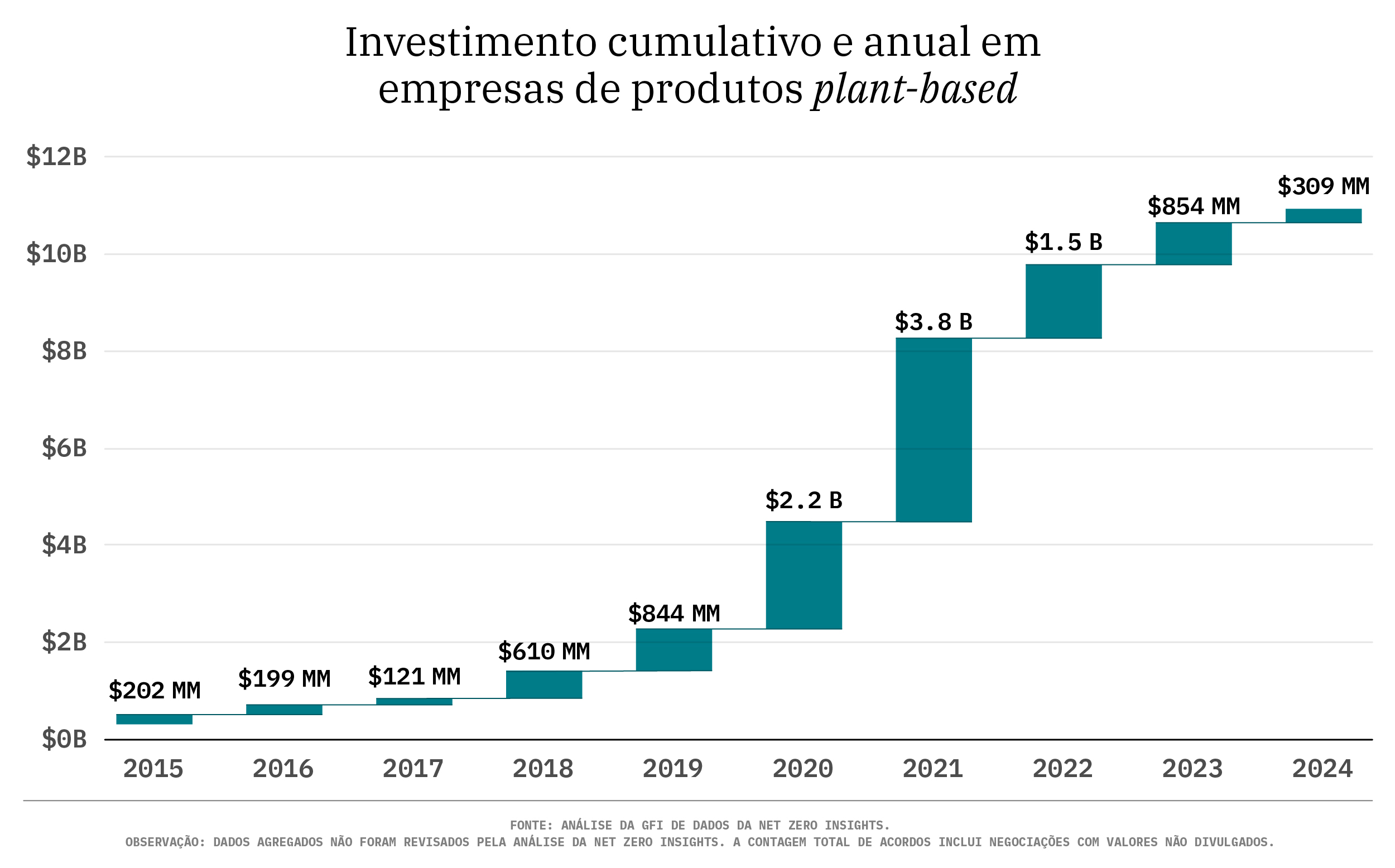
In 2024, the global alternative protein sector faced a challenging investment environment, reflecting a slowdown aligned with the trend observed in other climate technology and consumer goods segments. Private companies focused on plant-based meat, dairy, eggs, and seafood raised US$309 million that year, part of the US$1,1 billion invested in the alternative protein ecosystem, which also stems from other technologies such as fermentation and cell culture. Mergers and acquisitions also marked the period, signaling strategic moves towards consolidation and growth.
In Latin America, investments remained modest: US$280 was raised in 2024, totaling US$537 million since 2015. The region accounted for only one reported investment in the year, highlighting the need to expand access to capital and foster a more robust environment to support the sector's growth.
02. Global Alternative Proteins Market
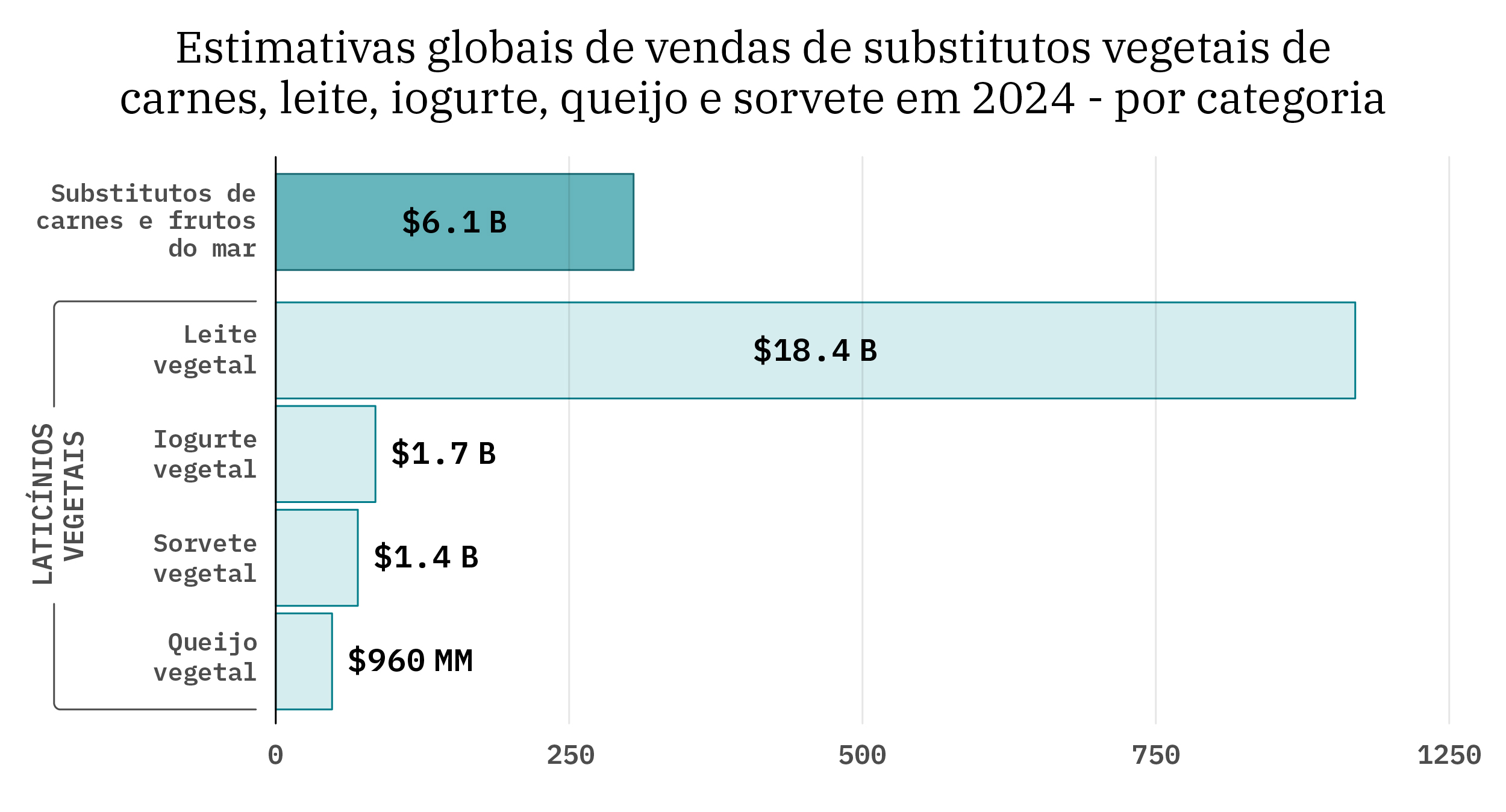
Globally, retail sales of plant-based alternatives—including meat, seafood, milk, yogurt, cheese, and ice cream—totaled approximately US$28,6 billion in 2024, representing a 5% increase compared to 2023, according to data from Euromonitor International. North America and Europe continue to lead in absolute values, but the Asia-Pacific region (including Australasia) also shows significant performance. Latin America remains an emerging market with room for expansion as the product portfolio diversifies and more consumers access plant-based alternatives.

01. Brazilian Market for Alternative Proteins
Plant-based substitutes for meat and seafood.
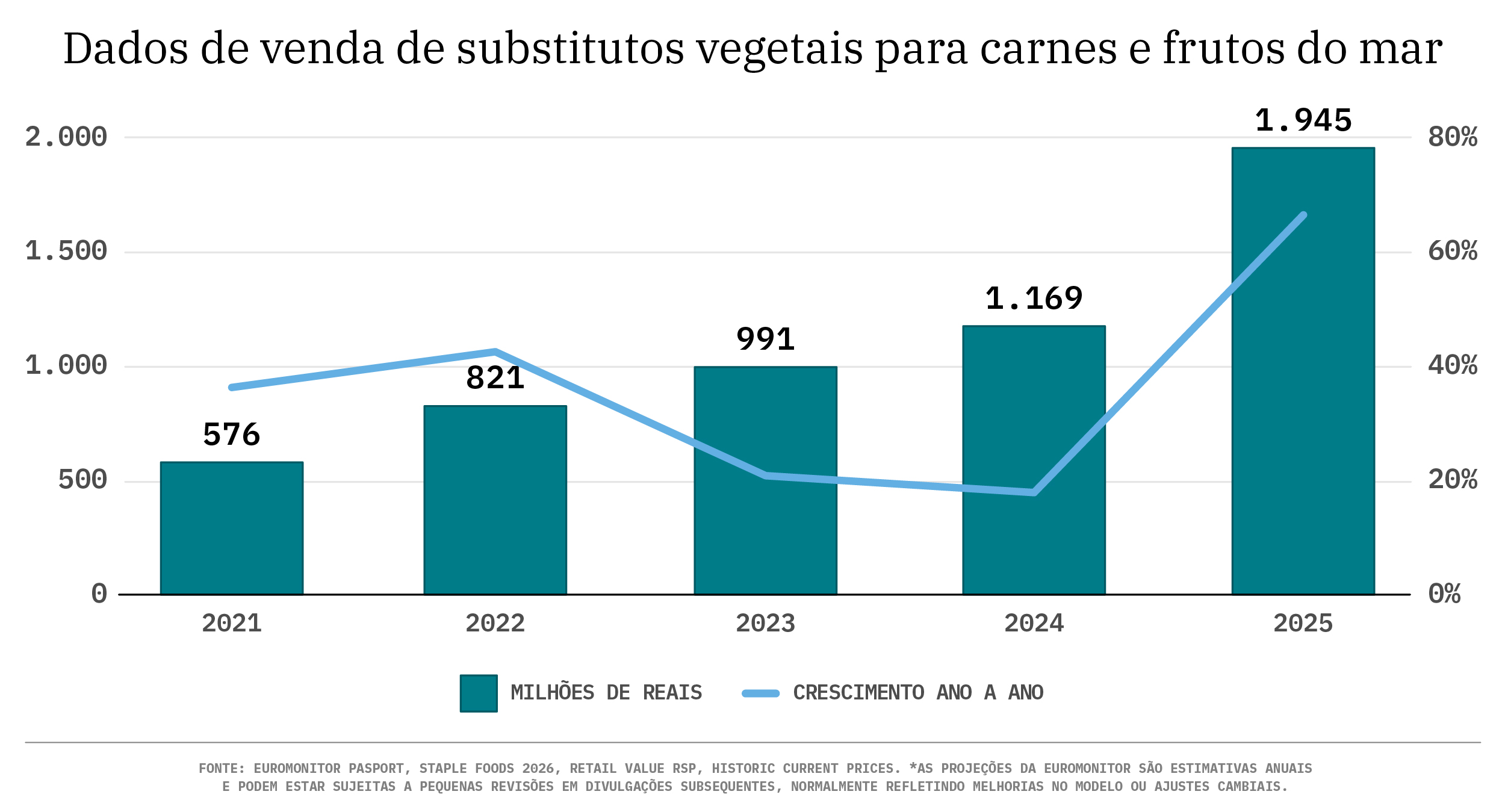
According to estimates from Euromonitor International, the Brazilian market for plant-based alternatives continues to expand. In 2025, the volume of plant-based meat and seafood substitutes sold at retail grew by 17% compared to 2024, exceeding 16 tons. The value of sales of these products directly to consumers reached R$ 1,9 billion, representing a growth of 66% compared to 2024.
The mismatch between growth in value and performance in volume was not unique to the plant-based meat category, but reflected a broader dynamic in the Brazilian food retail sector in 2025. According to data from Scanntech , the food sector ended the year with a 4,1% increase in revenue, mainly driven by a 6,3% increase in the price per unit, despite a 2,1% decrease in units sold. This data shows that, in 2025, a significant portion of the growth observed in the Brazilian food retail sector resulted more from price increases and changes in the consumption mix than from an effective expansion in the quantities purchased.
In the case of plant-based meat substitutes, this discrepancy highlights that the average price per kilogram of the product is higher and is the highest observed since 2018. A combination of factors may help explain this movement: a likely increase in the average ticket price, due to the arrival of more premium products and inflationary pressure, associated with the logistical expansion of large industries, which may have increased the supply in more expensive points of sale, although the barrier of the final price still seems to limit adoption in terms of volume.
Plant-based milks
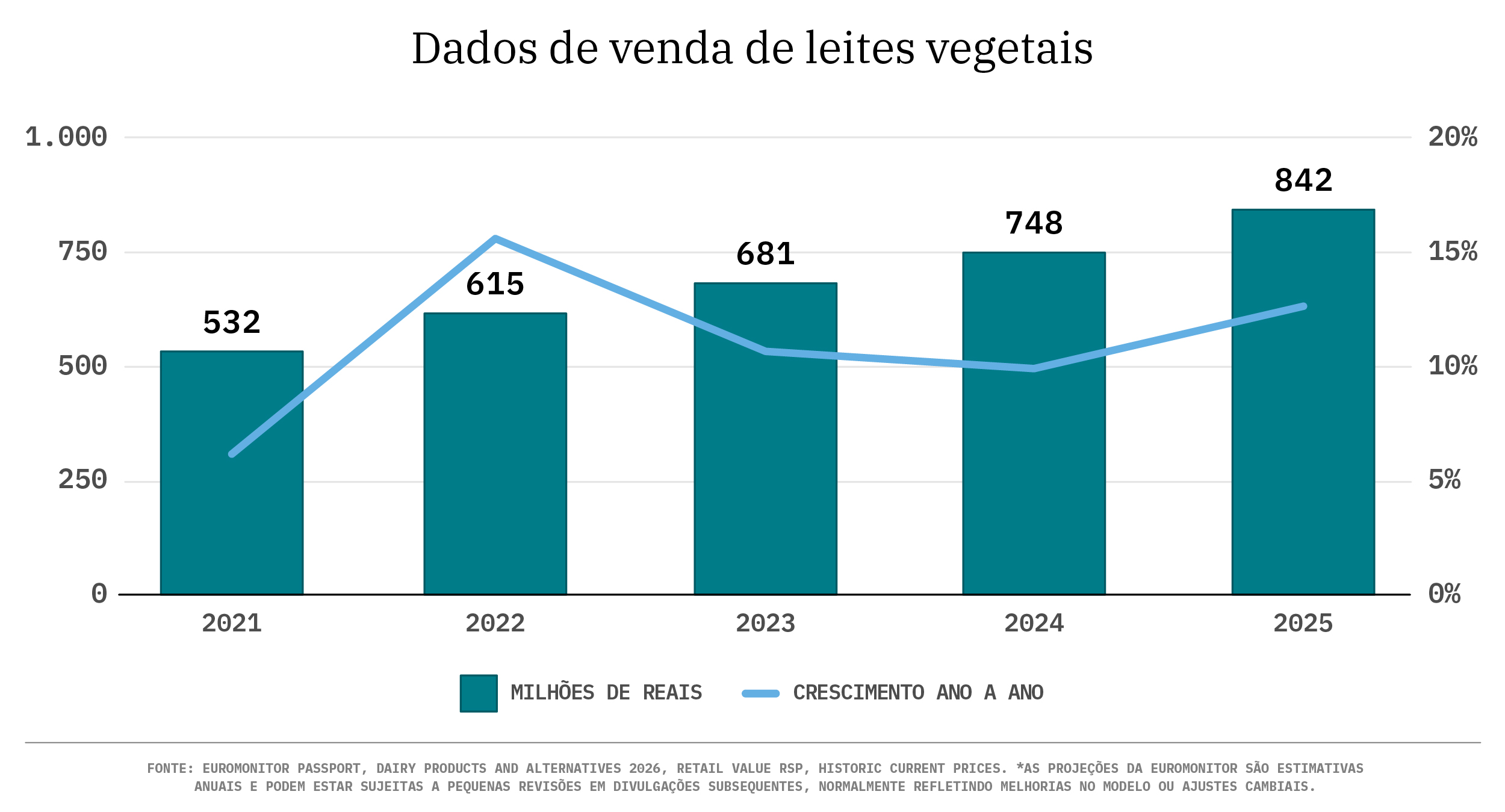
In the plant-based milk segment, retail sales totaled R$ 842 million in 2025, a 13% increase compared to the previous year. In terms of volume, the market remained practically stable, with just over 64 million liters sold. The diversification of ingredients and the entry of new brands, starting in 2019, continue to be key factors for the sector's positive results. The share of beverages made with ingredients other than soy increased from 17% in 2018 to 61% in 2025, considering the total value of plant-based milk sales to the final consumer, in reais.
This shift in the consumption mix reflects a profound transition in the Brazilian market: soy, although pioneering and accessible, is giving way to innovation and the added value of ingredients such as oats, almonds, and nuts, which today sustain the sector's revenue. From the perspective of the Good Food Institute (GFI), this scenario reinforces that the expansion of the category depends on the continuous improvement of flavor, texture, and nutritional profile, enhancing the sensory experience. For the sector to reach a new level of democratization and convert stable volume into real growth, the challenge for the coming years will be to focus on economies of scale and productive efficiency, aiming to reduce the price differential and consolidate plant-based alternatives in the consumer's basic food basket.
For information on the alternative protein market around the globe, access the State of the Industry reports , produced by GFI.
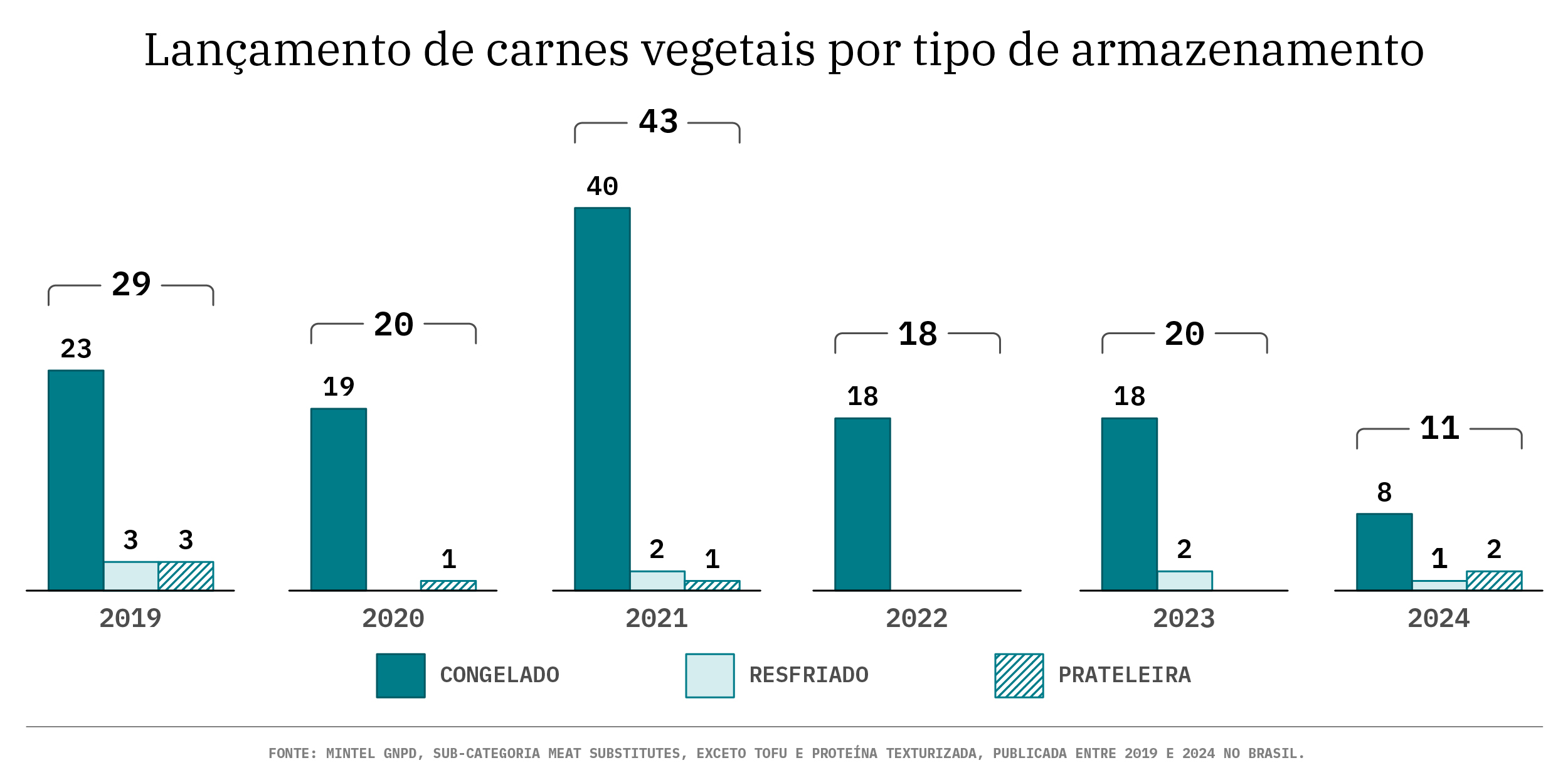
02. Plant-based meat launches in Brazil
Data from the Mintel platform indicates a fluctuating trajectory for plant-based meat launches in Brazil. The peak was in 2021 , with 43 launches , marking a surge in innovation and investment in the sector. From 2022 onwards , a sharp reduction was observed, with 18 launches that year, followed by 20 in 2023 and only 11 in 2024. This slowdown may indicate a phase of strategic reassessment by companies, after a period of rapid expansion.
Most products launched in the country belong to the frozen food category, while refrigerated and shelf-stable options still represent a smaller share of the market. In 2024, there was a slight increase in the share of shelf-stable products, indicating a possible trend towards diversification in preservation methods. This demonstrates a strong dependence on the cold chain for the marketing of these products, which may impact their distribution and accessibility to the end consumer.
Newsletter
Keep up with the latest news on alternative proteins
Sign up for the newsletter, receive industry insights and trends.
" * " indicates required fields.
By signing up, you agree to our Terms of Use and Privacy Policy.
Make a difference, be a supporter!
All of the work that GFI does is free, so donations from our community of supporters are essential.
GFI around the world
All of the work that GFI does is free, so donations from our community of supporters are essential.