My second participation in WAFI brought new perspectives on the transformation of Chinese food systems and the opportunities for Brazil to combine its agricultural strength with more science, technology, and added value.
Returning to China for the second consecutive year to participate in the World AgriFood Innovation Conference, WAFI, allowed me to observe changes that are not always clear when we follow a country from afar. In this edition held in September in the Pinggu district of Beijing, one of these changes was not only in the content of the presentations but also in the spaces seemingly dominated by other subjects.
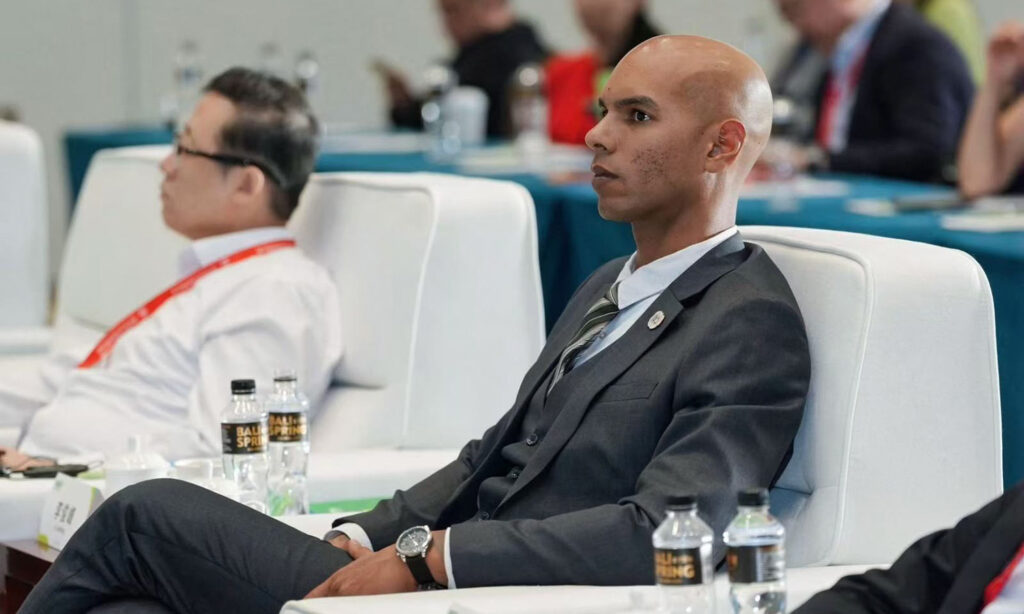
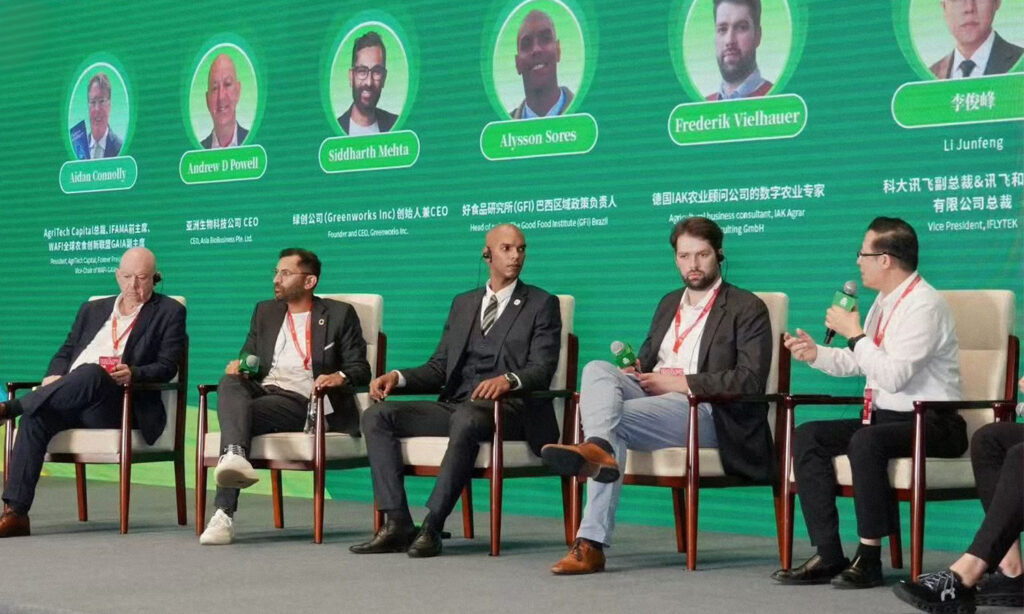
Alternative proteins remained present in the panels dedicated to the topic, but were not limited to them. They appeared in discussions about agri-food opportunities between Brazil and China, including during the discussion of the fifth Eco Invest Brasil auction, and in the panel I participated in. This transversal presence caught my attention: the conversation was no longer limited to the environment of a new food; it involved financing, international cooperation, and cutting-edge industrial development. In this sense, the technological advancement and Chinese interest compared to the previous year were noticeable, especially in cell culture and microbial fermentation.
I returned from there with a question that directly concerns our agribusiness: how can we transform these changes into opportunities to produce more knowledge, technology, and value in Brazil?
An agenda that goes beyond the plate.
The presence of alternative proteins in Chinese planning is not new. In the 14th Five-Year Plan cycle, from 2021 to 2025, the sectoral plan for science and technology for agriculture and rural areas already included research into cultivated meat and other foods of the future. In the 15th Five-Year Plan, from 2026 to 2030, biomanufacturing appears among the industries of the future, with applications that include food production.
This agenda connects to food security and the ability to diversify supply. Chinese agricultural planning combines increased domestic production capacity, innovation, and diversification of trade relations. The discussion on food sovereignty, in this context, involves not only having access to food, but also reducing vulnerabilities related to the technologies, inputs, and supply chains that make its production possible.
There are concrete examples of this transition from research to production. During a technical visit, the GFI APAC team documented an Angel Yeast facility with an announced capacity exceeding 11 tons of yeast protein per year. This doesn't mean that all technologies are at the same stage, but it helps to illustrate the industrial reach that some of them are beginning to acquire.
What does this mean for Brazilian agribusiness?
A study published by Systemiq in 2026 projects, in its baseline scenario, a reduction of approximately 25% in Chinese soybean imports by 2030, compared to 2025. In this scenario, the main factor is the decrease in the share of soybean meal in animal feed.
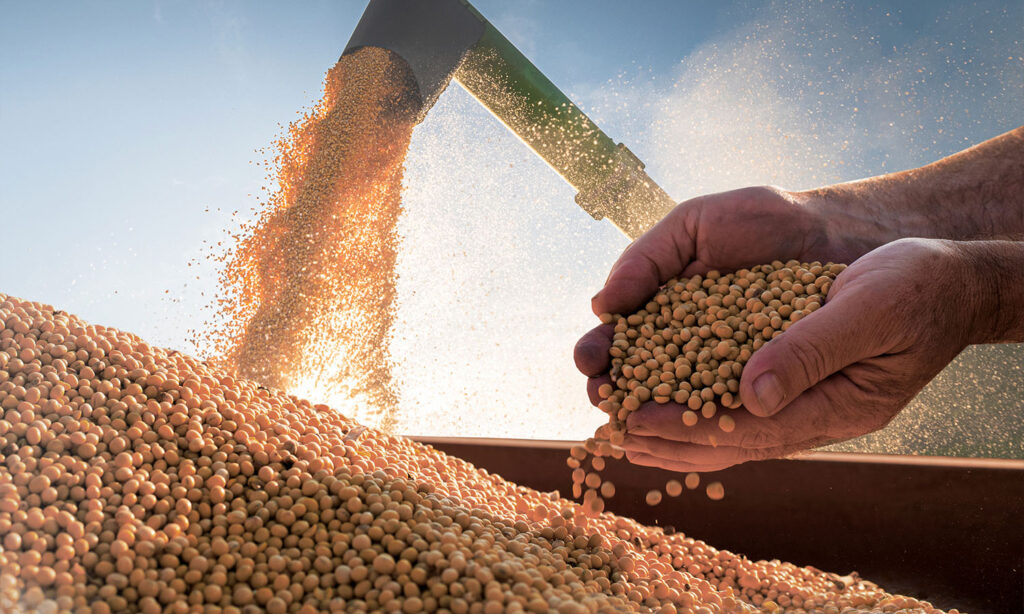
At the same time, for 2050, the study works with scenarios in which alternative proteins would meet between 35% and 55% of the Chinese demand for animal-based proteins. These are modeled possibilities, dependent on technological and economic advances, not official targets of the Chinese government.
This information is not contradictory. High levels of purchases today can coexist with efforts to reduce dependencies in the future. For Brazilian agribusiness, the question is not about choosing between optimism and pessimism, but about understanding how a possible change in demand could alter production and marketing opportunities.
And it is in this discussion that Alternative Proteins connect to Brazilian agro-industrialization. The opportunity is not limited to exporting a different product. It involves expanding what we can do with what we already produce. Research by Embrapa with protein concentrates from beans, lentils, and chickpeas, for example, shows ways to diversify the ingredients used in plant-based foods.
In fermentation and cell culture, there are also possibilities to transform agro-industrial by-products into higher value-added inputs. Sugars and protein hydrolysates can be integrated into culture media, provided they meet technical and safety requirements. GFI Brazil has already included the evaluation of these routes in its research calls, covering chains such as soy, corn, and sugarcane.
This allows us to view Alternative Proteins not as an activity disconnected from the field, but as a possible extension of its production chains. Between farming and the final food product, there is room for processing, ingredient development, engineering, equipment, and specialized services. And China is paying attention because it doesn't want to be left behind; on the contrary, it intends to lead.
Cooperation to build the future of the Global South.
The relationship between Brazil and China can also be examined from another angle: beyond the trade of agricultural products, what avenues exist for developing knowledge, technologies, and new production chains together?
To explore this issue, GFI Brazil will launch a call for research proposals (RFP) aimed at identifying new avenues for partnership between the two countries in alternative proteins. The intention is to produce a more concrete basis for understanding collaboration opportunities and guiding future initiatives.
There are, of course, significant challenges. In cell culture, for example, costs, culture media, and scale-up remain among the central issues for industrial viability. Scientific advancement does not eliminate these difficulties; it allows them to be investigated with more resources and experience.
My second participation in WAFI reinforced my interest in following this transformation beyond the announcements. For Brazil, the opportunity lies in connecting its agricultural production to new ways of producing food, also participating in knowledge generation and industrial stages. Our role, along with China, India, and other countries, should be one of leadership in this new revolution in food systems. And we are ready for it.

Author
Alysson Soares
Head of Public Policy
Check out our latest releases
18/12/25