
Summary
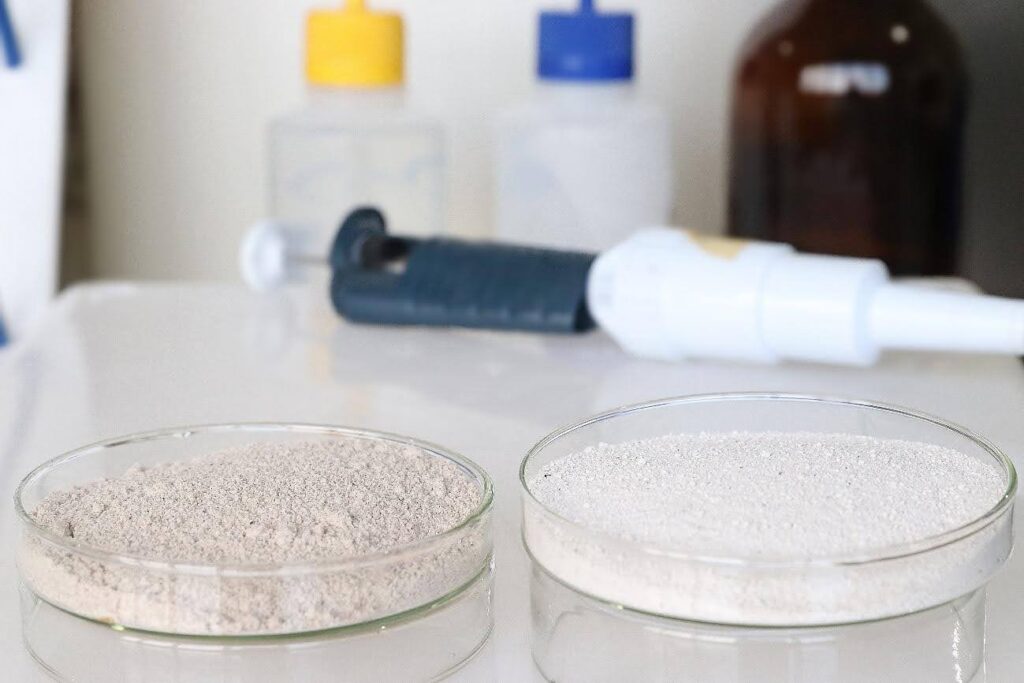
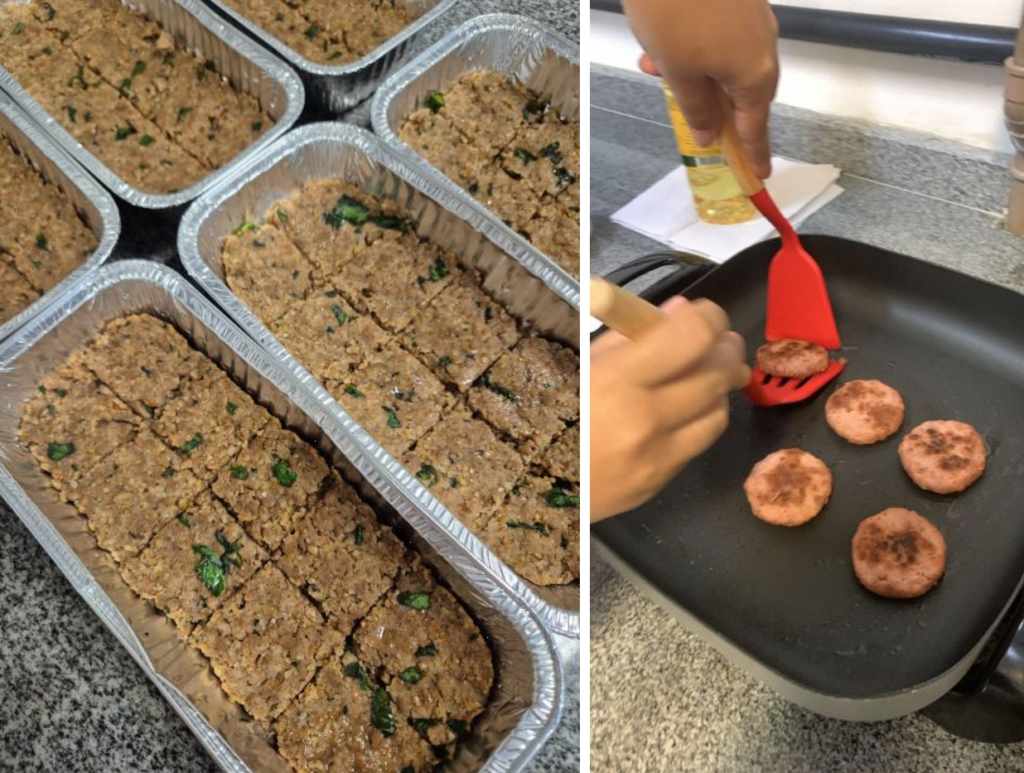
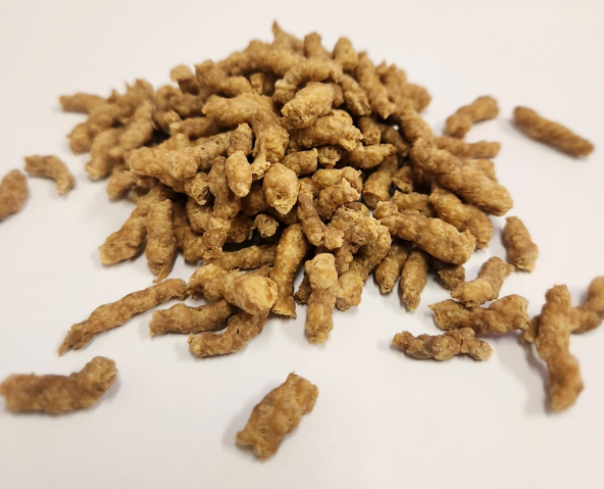
The demand for plant-based products is growing in parallel with the search for healthy foods. Considering the projected growth in the alternative protein market, it will be necessary not only to increase the supply of these products but also to diversify the protein options in their compositions. In this context, the Brazil nut, a species found in the Amazon region, shows potential for protein extraction, providing ingredients for the plant-based market, such as partially defatted flour (32% protein content) and Brazil nut protein concentrate (56% protein content). These protein ingredients, mixed with other commercial ingredients, are used in the preparation of kibbeh, hamburgers, and in obtaining textured protein, with excellent market prospects.
Proposed solution
The cake obtained after pressing to extract oil from Brazil nuts, which is commonly used in the cosmetics industry, represents a waste product in this oil industry. With the methodological protocols proposed in this research, this generated waste (Brazil nut cake) will have a valuable purpose, generating the possibility of increased income for the communities involved, as well as local agro-industries that can specialize in protein extraction technology, expanding income generation possibilities and local social improvements.
Technological advantage
Brazil nut flour and protein concentrate can be obtained from residues and nuts not validated for the fresh nut market . These nut residues are used for oil extraction, a valuable product used in the cosmetics industry, and also yield Brazil nut cake. From the cake, technology (developed in this research) can be applied to obtain partially defatted flour and Brazil nut protein concentrate. According to the economic study, both the flour and the Brazil nut protein concentrate show positive profitability, providing net income for the production cycle.
Project TRL, maturity level – TRL 4
Next Steps
Future work would be interesting to improve protein extraction techniques to increase efficiency and reduce costs, as well as to investigate possible new applications of Brazil nut flour and protein concentrate in other food products, such as protein-rich dairy drinks, appealing for use after sports training, and protein-rich extruded snacks.
Images
Related publications
- Obtaining and characterizing flour, concentrate, and protein isolate derived from Brazil nuts. Available at: https://www.infoteca.cnptia.embrapa.br/infoteca/handle/doc/1177863
Authors and affiliation
- Dr. Alessandra Ferraiolo Researcher at Embrapa Rice and Beans, Food Engineer, PhD in Chemical Engineering.
- Dr. Ana Vania Carvalho – Researcher at Embrapa Eastern Amazon, Agricultural Engineer, PhD in Food Technology.
- Dr. Janice Ribeiro Lima – Researcher at Embrapa Agroindústria de Alimentos, Food Engineer, PhD in Food Technology.
- Dr. Daniela de Grandi Castro Freitas de Sá – Researcher at Embrapa Agroindústria de Alimentos, Food Engineer, PhD in Food Technology.
- Dr. Laura Abreu – Researcher at Embrapa Eastern Amazon, Chemist, PhD in Food Technology.
- Dr. Melícia Cintia Galdeano – Researcher at Embrapa Agroindustry of Food, Pharmacy and Biochemistry, PhD in Food Science and Technology.
- Dr. Otniel Freitas-Silva – Researcher at Embrapa Agroindústria de Alimentos, Agricultural Engineer, PhD in Chemical and Biological Engineering.
- A Tomé-Açu Mixed Agricultural Cooperative (CAMTA) It will serve as a model cooperative for the use and transfer of technology.