
Summary
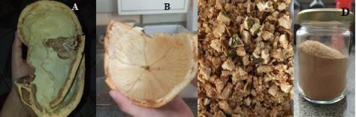
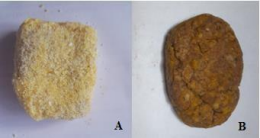
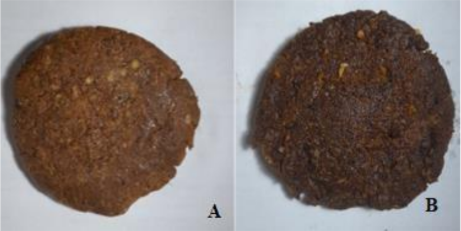
The project obtained delignified and modified fibers through clean routes from residues of the cupuaçu and guarana supply chain. The fibers obtained showed good water and oil retention, neutral taste and odor, and low levels of antinutritionals. Applied to plant-based hamburgers and nuggets , they resulted in products with 24% and 15,7% fiber, respectively, without soy, additives, or direct fat addition. The results of this study highlight both the potential for utilizing these residues and the technological viability of the fibers obtained for application in plant-based hamburgers and nuggets , emphasizing the differentiating factors of the developed formulations.
Proposed solution
The research transforms cupuaçu peels and guarana extract residues into functional fibers for plant-based formulations , addressing the low utilization of these residues and expanding the supply of Amazonian ingredients for the sector.
Technological advantage
The fibers obtained have high water and oil retention, neutral taste and odor, and low levels of antinutritional compounds. When applied to hamburgers and nuggets, they have enabled formulations with high fiber content, without soy, additives, or direct fat addition, in addition to paving the way for new Amazonian ingredients and byproducts.
Technology Maturity Level – TRL: 4 — Benchtop technology validation.
Next Steps
To move forward with pilot-scale testing, validate stability, microbiological safety, and sensory acceptance, optimize formulations with Amazonian protein sources, and investigate new uses for byproducts generated in the process, such as the gel obtained from guarana residue.
Images
Authors and affiliation
- Professor Dr. Luiza Helena Meller da Silva – Federal University of Pará (UFPA).
This project was developed within the scope of the Exploratory Research Funding Program focusing on the Amazon and Cerrado Biomes, with support from GFI Brazil.