
Summary
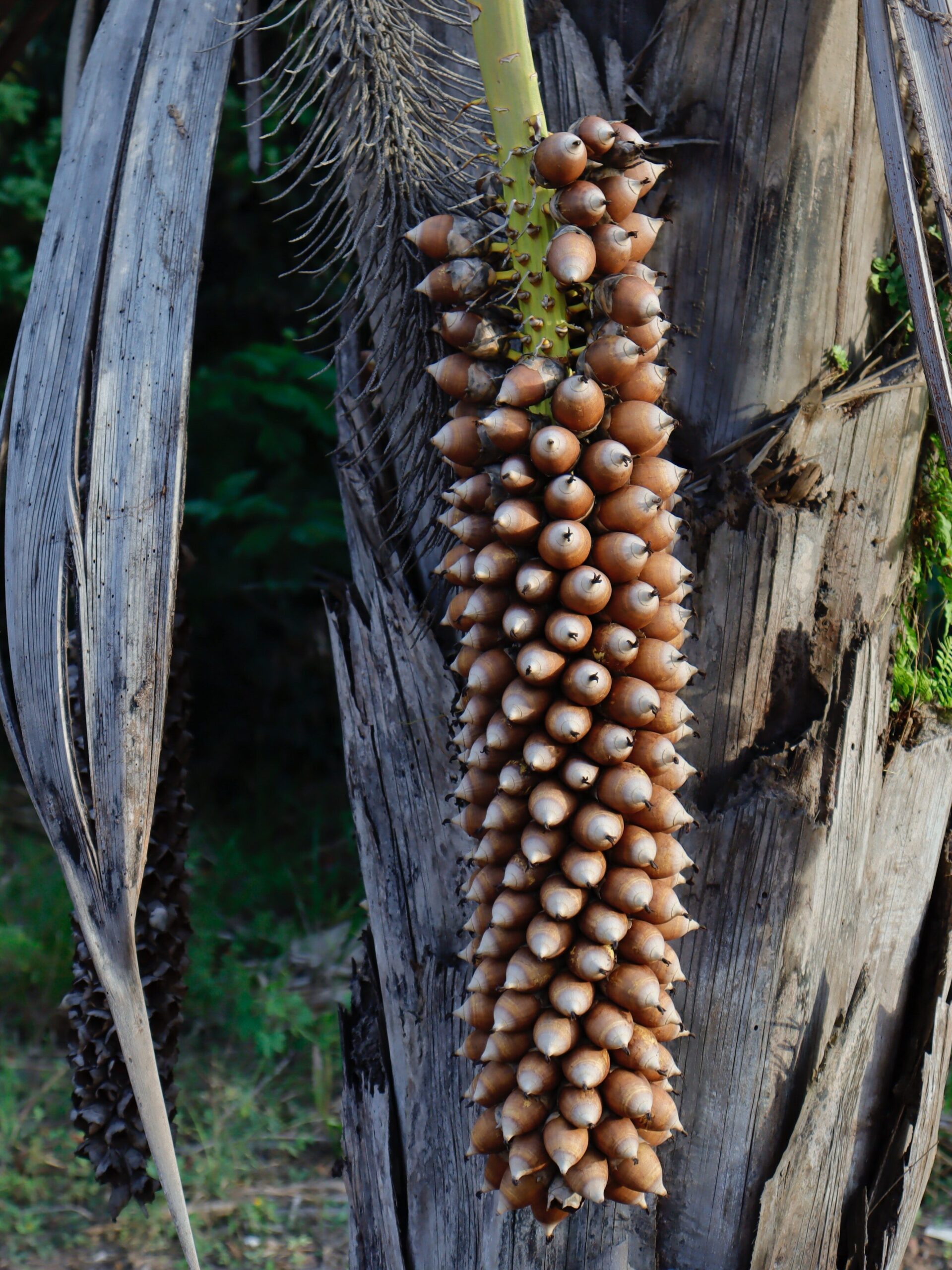
The project sought to evaluate how to use the residue from processing babassu almonds to develop a fiber-rich ingredient for use in plant-based products. The project determined the processing conditions, chemical composition, and stability during storage, in addition to the application of the ingredient in plant-based product formulations such as hamburger and mortadella analogues.
The ingredient has 42,7% dietary fiber in its composition, and when applied in product formulations, it allows the label to indicate “high content” of dietary fiber, considering the requirements of the Nutritional Labeling Legislation.
Furthermore, the ingredient has a high water retention capacity, similar to bamboo fibers or cashew peduncles, a property that is reflected in the performance of the formulations.
In addition to the technical requirements, those demanded by market niches can be considered, with the babassu almond ingredient, rich in fiber, also meeting social sustainability requirements (coconut cracking agro-industries), environmental (controlled extractivism) and regional (Amazon Region)/native.
Proposed solution
Through this research, it was possible to evaluate and establish the necessary steps to transform the residue from the babassu almond process into a dehydrated ingredient, rich in fiber, for use in plant-based product formulations. The partnership with GFI allowed us to carry out the research actions and the result is considered as an added value to the residue from the processing of vegetable beverages or oil extraction, increasing the economic viability and sustainability of babassu coconut agroindustries.
Technological advantage
The technological advantages of using this ingredient obtained from babassu almond co-product are:
– Ingredient with high water absorption, avoiding syneresis problems (technological functionality), when used in food formulations;
– Increases the dietary fiber content in the prepared formulation, a positive and desirable nutritional aspect. For example, when used in a hamburger formulation, a 115g portion contains 14,6% dietary fiber, which corresponds to 56% of the RDA, allowing the labeling to indicate “high content” of dietary fiber.
Technological maturity level – TRL: 4
Next Steps
The research demonstrated the possibility of producing the ingredient and applying it to hamburger and mortadella analogs. The aim is now to move forward with an increase in scale, and it is important to assess the economic viability according to the possible scale of production and necessary investments. We also consider it important to assess the impacts, in the case of implementing this project in agro-industries in babassu coconut extractive communities, such as social development, increasing the quantity of products obtained from agro-industries of babassu coconut breakers, with the diversification of products and expansion of the technological level.
Images


Authors and affiliation
- Nedio Jair WURLITZER – Embrapa Tropical Agroindustry;
- Therese Feitosa MACHADO – Embrapa Tropical Agroindustry;
- Selene Daiha BENEVIDES – Embrapa Tropical Agroindustry;
- Ana Paula DIONISIO – Embrapa Tropical Agroindustry;
- MAICO DA SILVA – (CNPq Master’s Scholarship Holder) – Federal University of Ceará;
- Dayse Karine de Rodrigues NETHERLANDS (Scholarship holder) – Funarbe;
- John Peter Fonteles MENEZES (Pibic Scholarship Holder) – Federal University of Ceará;
- VIANA (Scholarship holder – CNPq) – Federal University of Ceará;
- Paul Henry Machado de SOUSA (Professor) – Federal University of Ceara;